First of all, the European Patent Office is the second largest European institution after the European Commission but it is not well known. We are looking for employees to strengthen our ranks. There are opportunities other than the academic and socio-economic sectors; working in the public service is also an option and we offer positions that you may not think about when you are looking for a job. The EPO recruits every year. The Crossborder Postdoctoriales’ audience corresponds to what we are looking for, i.e. doctors who are naturally mobile and open to expatriation. A large majority of the participants in this event in Luxembourg are themselves expatriates. They are open-minded, active people with a PhD, who may not necessarily come to work with us, but who can get the message across in their communities, in all fields of technology and science. This is what the EPO encourages them to do.
I realize that young researchers are not necessarily familiar with the world of patents. The world of research cannot disconnect from industrial property. Small businesses and research laboratories should be connected to work together. We must continue the effort.
In addition, it is important for us to know the “job market”. If we remained passive in our ivory tower, we wouldn’t know what’s going on outside. How can we send the right message to the right people in the right form? How should I communicate with a candidate in 2018 compared to a candidate in 2000? You have to know who does what, you have to stay informed. For this reason, it is important to be able to discuss with professionals from other sectors. Events like Crossborder Postdoctoriales therefore offer the dual advantage of putting us in contact with PhDs and professionals who target the same public as us, but who have different constraints and are looking for different things. An SME and a European institution do not seek the same qualities in PhDs. During the event, participants are also given the opportunity to reflect on what they prefer: for example, short term and creativity or long term and stability.
On the participants’ side, we see proactive and motivated people. Several participants had, I think, post-doctoral experiences after their PhD because they were interested in their field, but they understood that there was a term (to post-doctoral contrats) and that they had to change paths. They take full advantage of the workshop, we see it in the precision of the questions, in the contact requests… one of the participants has already given me her CV to proofread! We create an osmosis phenomenon between these proactive participants and those who are relatively behind. They become aware that the job market is a competition and they are encouraged to adopt the right reflexes, to be dynamic. The mission is fulfilled on this level.
The PhD has allowed me to have a fairly quick career within the Office, since I became a director in 12 years. That’s because when I have arrived at the EPO, I was already an expert in my field, with the ability to communicate and teach. What is very important to know when you join a team is that you are not a ‘cocoon’. You have to communicate with your colleagues, learn from them and teach them things. The advantage of research and its way of organization is that we already know how to do this. Learning together, teaching complex things in a simple way, these were things I knew how to do when I was a PhD candidate. Moreover, when you work in your own field of expertise, you are used to looking for information. We understand faster. I was operational right away. The PhD experience gave me an advantage over someone who still has to learn.
You can recruit someone who knows how to learn, who has a master’s degree for example, but who has not done a PhD, so who has never searched on his own. This person should still learn while a PhD is already autonomous. You tell him/her what is needed and s/he’s usually going to get it on his/her own. A PhD needs much less guidance and s/he will very quickly bring new ideas; the master’s graduate will need a few years before s/he starts bringing new ideas.
There is an added value in recruiting a PhD, but not a PhD who has locked him/herself away for years doing more and more of the same thing. This is the advice I would give to doctorate candidates and holders. For example, when you do three post-doctorates on the same subject, you become a specialist in a small niche but there is no real added value, except for someone who needs this hyperspecialization. And the probability of finding this employer is minimal! I therefore advise PhDs to leave their comfort zone, to be curious, to continue to love learning but to see the doctorate as a step and not an end in itself. A step not to become the specialist in a very specific field but to be able to learn more, understand more and explain it to others.
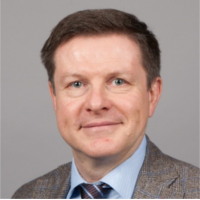
Régis Quélavoine himself has a PhD in computer science and is Director of Operations in Mobility & Mechatronics at the European Patent Office (EPO) – The Hague. EPO’s core activity is the search and examination of patent applications and the grant of European patents. It is the second largest intergovernmental organization in Europe, which currently employs nearly 4400 patent examiners from 38 different nationalities, around 80% of whom have a PhD.