 From France to Australia …
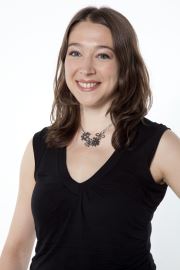
From the end of the first year of her Master in Public Health, Marina Kvaskoff began preparing her PhD project incorporating a stay in Australia.
Her thesis which subject is “Endometriosis, genetic polymorphisms associated with nævi and cutaneous melanoma risk” was made in co-supervision between France (University Paris 11) / INSERM (Institut national de la santé et de la recherche médicale) – IGR (Institut Gustave Roussy), CESP, team 9) and Australia (the University of Queensland / QIMR (Queensland Institute of Medical Research), team “Cancer Control Group“).
Why this choice?
Australia was the opportunity to do a doctoral research on skin cancer in the country and especially in the State (Queensland), where the incidence of this kind of pathology is the highest in the world.
After an initial six-month stay in 2007-2008, Marina went back to Australia for a further period of six months in 2008-2009. In financing terms, only the Fondation de France agreed to fund a thesis incorporating a stay abroad. In addition to this Graduate Scholarship, Marina got a support from the Cancer Council Queensland, covering the period when she was in Australia. The French Embassy in Australia supported for its part, the first trip in the framework of the program of “joint supervision” travel grants (up to 2100 Australian Dollars (AUD)). The second travel was, meanwhile, funded by the SETCI device (support for international co-supervision of theses) of the Ile-de-France region. This device also covered travel expenses of the jury’s members (airline tickets, accommodation…). Thus, “my Australian thesis supervisor and two American researchers (including my current manager at Harvard), who were my two rapporteurs”, have been able to come to France to attend the thesis defence. “I wrote and defended my thesis in English, what I recommend for joint-supervision PhDs, because it allowed me to have an international jury and to establish very early contacts, as well as to have from the beginning a strong relationship with my American manager. What one’s should know is that if the thesis is written in English, it is not eligible for a lot of thesis’ award. I also got a national fellowship – L’Oreal-UNESCO – which allowed me to attend several international conferences during my PhD, as well as to return to Australia during my postdoc “.
Some words about daily life, this experience?
“The nature in Australia is amazing and beautiful. I had already been there, when I was fifteen to learn English and for my Master 1 traineeship. In terms of language, after the first two or three months which are a little hard, things are quickly getting better. “Suddenly we heard a song on the radio, and we understand everything. Do not get discouraged, and do not hesitate to go and meet people, contact helps a lot”.
Prospects after the PhD?
Marina spoke very early with her current manager about her mobility project in the United States in the framework of a postdoc. This project consisted on the one hand, in a short stay in 2010 to reproduce an analysis of her thesis in the United States and on the other hand, in a longer postdoc in 2011. If her manager’s feedback was positive, funding could be a problem. “So I sought funding, and I found. Before my thesis defence, I applied for the “Prix Jean Darier” of the SVR Laboratories, an award for a project in the field of clinical dermatology and epidemiology of skin diseases. The amount of € 8,000 helped to cover travel and accommodation costs during my two-month stay in 2010, and to open a computer account (about US$7,000) which is a necessary condition to work at Harvard. “I also got a Postdoctoral Fellowship of the Fondation de France, which allowed me to finance my first postdoc year in 2010 made between the United States, France and Australia”.
From Australia to the United States…
“My thesis’ outcomes highlighted hypotheses in a field where the best data, are available in the United States : the epidemiology of endometriosis. However, Marina pursues her collaboration on skin cancer with Australia where she went for three weeks in April.
The post-doc was first held in France, followed by two months in Boston (USA) and two months in Brisbane (Australia) in 2010 and fully in Boston since 2011.
In terms of financing, if the first time, Marina was unable to get a Marie Curie mobility grant – support which she particularly wanted – she was awarded the “Prix Jeunes Chercheurs” (young researchers’ award) of the Fondation Bettencourt-Schueller, and a scholarship “Séjour à l’étranger” (stay abroad) of the Fondation ARC.
If the anticipation seems to be a feature of Marina’s career, perseverance is another one. Thus, she applied a second time to the Marie Curie Fellowship. On the basis of the detailed report received after the first application, which enabled her to know the strengths and weaknesses of her profile, she got finally this funding.”This scholarship is really great, it finances my salary, travels and registration to congresses till 2015″. Furthermore, this involves a two-year stay in the USA and imperatively, a year, the last one, in France. “However, I’m already preparing funding for my return. You have always to anticipate, I was able to self-finance me so far, but it took me to be very active, which has not always been easy”. Mobility is always a risk, and in particular we do not know if we will get the funding requested, but when we do “all for” we find ways in order it works in one way or another. Perseverance is always an appreciated quality”.
Some words about your current research?
“In the US, I’m working on endometriosis and its relationship with skin cancer. My thesis has highlighted new risk factors for endometriosis, and it is on this topic that I continue to work. I’m also interested in the relationship between hormones and skin cancer. Marie Curie funding being European, it must be managed by an institution in France. I am thus currently under contract with the Institut Gustave Roussy in Villejuif () while being based in Boston.
Some words about daily life, this experience?
“Boston, even if it is the third most expensive city in the United States, is a very nice, young and dynamic city. A very dynamic scientific environment with the MIT (Massachusetts Institute of Technology), Harvard, Institutes and hospitals at the forefront of medical research. I’m learning a lot of things in this environment. In particular, I’m improving my professional skills, but also what so-called “soft skills” such as “leadership” ones. This is very important in the career of a researcher. In terms of everyday life, it is easier here compared to the one I had in Paris. I live a few minutes from my lab. That said, it was not so easy the first year, because my husband, who came with me in Boston, could not immediately find a job”.
And if you had to do it all again?
“I don’t regret, I am really happy with this career. It is incomparable with what I would have done if I had stayed in France”.
Which advice would you give to a PhD student, a young researcher?
“Carefully prepare your departure, get in touch with people who have this kind of experience. Anticipate funding requests. When there is an offer for a thesis position or a postdoc, it’s easier, because the funding is provided. But having her/his own funding can be really rewarding: we have a project in mind and we will contact people who will help us to achieve it. The anticipation is very important. Of course, as with any project, there are always obstacles, and we can not foresee everything. But in general, when you are well prepared, things are going well”.
If you wish to learn more about the mobility experience of Marina, you can contact her at the following address: marina.kvaskoff@channing.harvard.edu