California

I arrived at DNAX-Schering-Plough Biopharma after answering an ad published in Nature. I was able to work in a company with a J1 visa, a rare thing indeed. DNAX had 240 people of 40 different nationalities, many of whom didn’t speak English very well, like me. There was a fabulous atmosphere with a high degree of innovation driven by the postdocs (a third of the company’s staff). I stayed there for three years with a reorientation of my postdoc in 2001 because DNAX had to focalize on developing therapeutic molecules. As a result, I switched from research to development. When my contract terminated, I looked at the opportunities in France but with nothing concrete on the horizon, I decided to take advantage of the offers I was made in the San Francisco area. I joined Excelis (500 people) where I was able to manage projects way upstream, until the clinical trial phase. Then I went over to Genentech which operated without any real sense of project management, a sort of suggestion box organization with a Darwinian project selection process. The place was teeming with ideas but sometimes kind of a mess, yet incredibly stimulating.

In seven years of career experience in the United States, I was confronted with different methods for advancing a molecule into clinical trials. I don’t think one is any better than the other, each is adapted to a structure, a history and the human resources available.
One enormous advantage is that in California, you can work in very open-minded multicultural teams and take on a lot of responsibility very early on. Hierarchy isn’t entirely absent but it’s very soft and interpersonal communication goes from the bottom to the top of the organization chart. In France, things are much more compartmentalized and sometimes that slows down project advancement.

More content to discover

  • Webinar ABG x RnMSH: Continuing the Exploration of Careers Between Science and Society

    You participated in the webinar « What careers are available after a PhD in the Social Sciences and Humanities? ». To continue the discussions initiated during this round table and help you take the next steps, the ABG and RnMSH teams have put together a selection of resources, tools and practical guidance to support your exploration of careers at the interface between science and society.

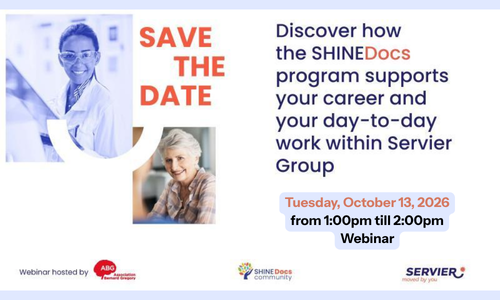
  • SHINEDocs webinar: career opportunities for PhD students and postdocs at Servier!

    Join Servier, a global player in pharmaceutical research, and explore the opportunities offered by the SHINEDocs programme! To find out more, join us for the information webinar on 13 October 2026, from 1pm to 2pm.

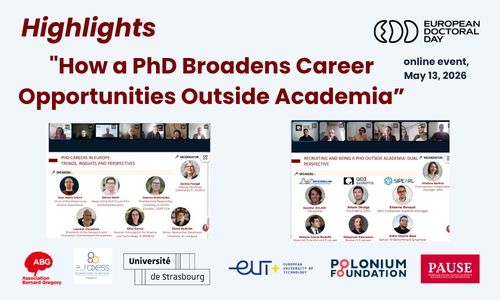
  • Highlights of the European Doctoral Day 2026

    On 13 May 2026, the first edition of the European Doctoral Day took place across Europe. As part of the EDD framework, ABG organised an online event that brought together doctoral candidates, postdoctoral researchers, career development professionals, employers and institutional representatives from across Europe and beyond. The event was organised together with its European partners: European University of Technology (EUT+), Euraxess France, the University of Strasbourg, the Polonium Foundation and the PAUSE Programme. Dedicated to the theme "How a PhD Broadens Career Opportunities Outside Academia", this inaugural edition attracted more than 200 attendees joining the live webinar throughout the day. In this article, you will find the programme highlights, key messages from the discussions, participants' feedback and resources to continue exploring doctoral career opportunities across Europe.

See all articles in this section